Villagers Join Battle Against Yamuna Pollution

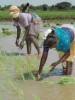
Animal carcasses are not to be dumped into the river, washermen should not use chemicals to wash dirty clothes, the river bank is not to be used as a toilet and no polythene bags — these are among the measures villagers in Rajpura, in Mathura district of Uttar Pradesh, have planned as part of their campaign to clean up the polluted Yamuna.

Hundreds of villagers from Rajpura, a few kilometres upstream of Vrindavan in Mathura district, on Sunday pledged support to the campaign to save the Yamuna river from pollution and make its water potable.

With people from 73 villages in the district joining, the campaign has become the biggest public initiative in the region against river pollution.

The man who leads the campaign is Mathura’s Chief Development Officer Ajay Shankar Pandey who, during his earlier stint in Ghaziabad, had changed the profile of the polluted Hindon river.

Talking to IANS, Mr. Pandey said: “We told the villagers not to wait for others for what they could on their own. It is about saving a dying river, a holy river at that. A series of meetings and interactions with the village leaders and activists helped us draw up a plan of action. We are now putting that into practice.”

“We are confident that once the villagers lead and show the way, the city people will not remain idle spectators but will get involved,” Mr. Pandey added.

A super body called the Yamuna Mitra Panchayat will oversee the operation river clean-up.

“A whole lot of agencies have been roped in, including the panchayti department at each block as well as at the district headquarters and the departments of village development, irrigation, horticulture and fisheries. They will coordinate with the Yamuna Mitra Panchayat to ensure the success of the mission,” a confident Mr. Pandey said.

Each village will have a committee with the pradhan as the chairman. The committee will have three members — two panchayat members and either the panchayat secretary or any one interested in water conservation.

Yamuna enters Mathura district near Chondrash village and passes through Banger, Raipur Banger, Tilak Garhi, Barka, Chonki Banger, Bhadaiya and Madaur. After Saraisal the river enters Agra district.

Despite being one of the most sacred rivers in India, the Yamuna in Mathura presents a picture of total neglect.

Court petitions have led to the construction of the Gokul Barrage in Mathura. However, it has not made any difference to Yamuna’s pollution. The river runs like a huge sewage canal transporting industrial effluents and municipal waste.

According to Mr. Pandey’s plan, the committee will ensure animal carcasses are not thrown into the river. Washermen will not be allowed to use chemicals to wash dirty clothes in the Yamuna. One pond in each village will be marked for washing clothes.

The committee will also stop people from constructing latrines or using river banks as toilets.

The panchayat will ban polythene bags and offenders will be punished.

“The villagers will also ensure that idols, toys painted with harmful dyes and puja materials are not immersed in the river. Separate bins will be provided to collect such material,” he said.

The villagers will also help identify the canals and drains discharging into the river, which will be diverted to other routes or would be fenced to fish out polythene and other non-degradable materials.

The plan further includes river ranching, which would be encouraged as it is one of the natural ways of river cleaning, according to the official.

“The movement will for the first time see each villager participating. This can also help in dealing with industrial pollution too. Within a year I assume the water quality would improve significantly,” Pandey expressed his optimism.

Source: http://www.thehindu.com/sci-tech/energy-and-environment/article1077364.ece

The Dark Side Of Globalization

Although we may not have yet reached “the end of history,” globalisation has brought us closer to “the end of geography” as we have known it. The compression of time and space triggered by the Third Industrial Revolution —roughly, since 1980 — has changed our interactions with the international environment. For many, globalisation — the intensified cross-border exchange of goods, services, capital, technology, ideas, information, legal systems, and people — is both desirable and irreversible, having underwritten a rising standard of living throughout the world. Others recoil from globalisation as they feel it is the soft underbelly of corporate imperialism that plunders and profiteers on the back of rampant consumerism. Read more »

Promoting Sustainable Agriculture In India

Agriculture sector, world over, has experienced a phenomenal growth since the mid-twentieth century. The growth, driven by Green Revolution technology, has made a significant dent on aggregate supply of food grains, ensuring food security to the growing population. The next stage of agricultural growth however, faces a serious challenge in terms of sustainability. Whereas the main problem faced by the developing countries in the south pertains to sustainability of resource use, the main challenge facing the developed economies in the north is overuse of chemical inputs. These problems have led to increasing awareness and a felt need for moving away from the input intensive agriculture perused during the Green revolution phase, to sustainable farming in different parts of the world. Read more »

Enhancing livelihoods Through Minor Forest Products

A new paper by Dr N C Saxena on how to improve production, access, and incomes from MFPs for forest dwellers. Whereas 70 per cent of India’s population lives in rural areas, for tribals this is as high as 90 percent. It is well established that most tribals live in forested regions, and their economy is heavily based on gathering from forests. In all about 100 million people living in and around forests derive at least part of their livelihood from collection and marketing of non-timber forest products. Read more »

Cancun clinches deal—for polluters

Cancun has restored the sanctity of multilateral negotiations under the UN climate convention. People had lost faith in it by the end of the Copenhagen meet last year. But what is the cost of the Cancun success? The new deal erases the difference between developed and developing nations. Developed countries no more have to commit legally to cut emissions. And what they pledge to do voluntarily is too little. On the other hand, developing countries will now have to take on binding commitments. While developing countries share the burden of cleaning up, financial and technological help the rich promised them remains just a promise. Read more »

Joint MOEF-MOTA Committee On Forest Rights Act 2006 Submits Report

This report by National Committee on Forest Rights Act (FRA) submitted to Shri Kantilal Bhuria, Minister of tribal affairs says that with notable exceptions, the implementation of FRA has been poor & includes suggestions for implementing it effectively.The Ministry of Environment and Forests and the Ministry of Tribal Affairs constituted a Joint Committee in April 2010 to comprehensively review the implementation of the Scheduled Tribes and Other Traditional Forest Dwellers (Recognition of Forest Rights) Act, 2006. Read more »

Sustainable Use of Mineral Resources

By Nandkumar Kamat
NATURAL geodynamic processes blessed Goa in bestowing vast mineral reserves. Singhbhum, Bastar, Karnataka and Goa are rich in minerals compared to rest of India. Goa Mineral Ore Exporters’ Association (GMOEA) represents major stakeholders of Goa’s economy in terms of employment and income. Goa needs to look carefully at the old paradigm of mining and move towards the new global paradigm of sustainable mining which would judiciously conserve the non-renewable resources and reduce environmental conflicts. GMOEA would have to aim for sustainable mining for sustainable wealth generation, while keeping communities which matter always in the picture. Read more »

Is This RP2011 All Over Again?

The Regional Plan (RP) stipulates that zone changes approved, conversions sanctioned and licenses issued in the areas now classified as ESZs shall hold good and that those areas will be appropriately mapped. Considering that the state-level committee (SLC) has approved, inter-alia, many requests from individuals for change of zone of land owned by them, and considering the possibility of the ESZ discussions in the task force being in public domain, one cannot rule out an encore of 2005-2006, when land mafias bought a zone-change for huge tracts of land purchased through influential brokers in high places. Read more »

‘ESZ Policy Useless Sans Mining One’

The Regional Plan 2021 has been notified for Pernem and Canacona talukas. Barring a few policy statements and the VP status, the plan relates only to these two talukas. The plan is a confusing compromise between the recommendations of the Task Force, demands of the panchayats/gram sabhas, decisions of the State-Level Committee (SLC) members and perhaps the hidden agenda of the political class and their mentors. Read more »