No System to Prevent Corruption

INDIA has been the victim of a number of scams in the past, but none of them, not even the Bofors payoffs, created such a sustained furore. I can only think of two explanations. First, the scale, the spread, the reach and the technological, financial and manpower resources of the media cumulatively enable them nowadays to keep feeding the public frenzy for days on end with breaking news, commentaries, talk shows, leaks, debates and what-have-you and make even a whisper sound a like an unending roll of thunder. Second, the amounts involved in loot and plunder in old-time scams were peanuts compared to the present-day sky-rocketing magnitudes. Read more »

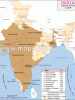
India releases major new study on climate change

India today released a major new report today that provides an assessment of impact of climate change in 2030s on four key sectors in four climate sensitive regions of India. The Report has been prepared by INCCA, India’s netowrk on climate sciences. Releasing the report, the Minister for Environment & Forests, Mr Jairam Ramesh, noted: “There is no country in the world that is as vulnerable to climate change as India. I am glad that for the first time such a comprehensive assessment has been undertaken”. Read the report.

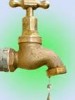
Only 30% of rural India has access to tap water

Painting a dismal picture, a government survey on Monday revealed that only 30 per cent of rural population had access to safe drinking (tap) water in the country. It said 55 per cent depend on tube well or hand pumps to meet their drinking water requirement. The findings are stated in the National Sample Survey Office study on housing condition and amenities in India, 2008-09. It may be recalled that the government is working on a comprehensive water policy to charge for the use of the natural resource. Read more »

3 New Indices To Ensure Relevance To Realities

In an effort to ensure relevance to emerging realities and to cast important light on challenges that persist, three new indices were introduced in 2010 in the UNDP’s Human Development Report.
The three indices introduced in 2010 measurement are the Inequality-adjusted HDI, gender inequality index and multi-dimensional poverty index.

Speaking at the occasion, UNDP’s resident representative Patrice Coeur-Bizot stated that there was a need to introduce new indices to update the report according to prevailing conditions in the world.
The inequality-adjusted HDI discounts average human development for inequalities in health, education and income in 139 countries. India’s HDI for 2010 is 0.519. However, when the value is discounted for inequality, the HDI falls to 0.365, a loss of 30 per cent due to inequality in the distribution of dimension indices, the report says.
The gender inequality index measures disparities in the work force, health and empowerment that adversely affect women. “In India nine per cent of parliamentary seats are held by women and 27 per cent of women have a secondary or higher level of education. India ranks at 122 out of 138 countries while Bangladesh and Pakistan are ranked at 116 and 112 respectively on this index,” the report stated.
The third newly-introduced index, the multi-dimensional poverty index identifies serious overlapping deprivations in health, education and living standards, which is estimated to affect 1.7 billion people, or one third of the population of 104 developing nations.
Goa Farmers Oppose Proposed Underground Gas Pipeline

Goa Government’s proposed underground gas pipeline project has met opposition from farmers hailing from three agriculture-dominated talukas of the state. Farmers from Mormugao, Ponda and Bicholim talukas yesterday met revenue officer Anthony D’Souza expressing their opposition to the Dabhol-Bangalore pipeline, which will be plugged at Gokak to provide supply gas to Goa.

Read more »

Economic Geography Matters

The recent controversy with regard to computation of the GDP raises some issues. Is GDP always the appropriate indicator to measure the economic activity of a country or a region? Why is it important for us to have a geographical perspective on this aggregate measure of economic activity? Economic activity clearly is much more intense near oceans, or, if inland, along navigable rivers where transportation by ship is feasible. Read more »

New Education Policies Needed To Combat Widespread Illiteracy

India needs to drastically change its education system to combat the illiteracy impacting its workforce, which now stands at a mind-boggling figure of 860 million. “Illiteracy is impacting the demand and supply of employable workforce in India,” Hari Bhartia, President, CII, told the India Economic Summit of the World Economic Forum in New Delhi on Tuesday. Read more »